A vague invoice is the easiest excuse a client will ever get for paying you late. "We weren't sure of the amount", "it didn't have a due date", "accounts couldn't match it to a PO" — every one of those delays is preventable with a document that takes five minutes to build properly. This guide covers exactly what goes on it, how to number it, and the escalation path when the due date passes anyway.
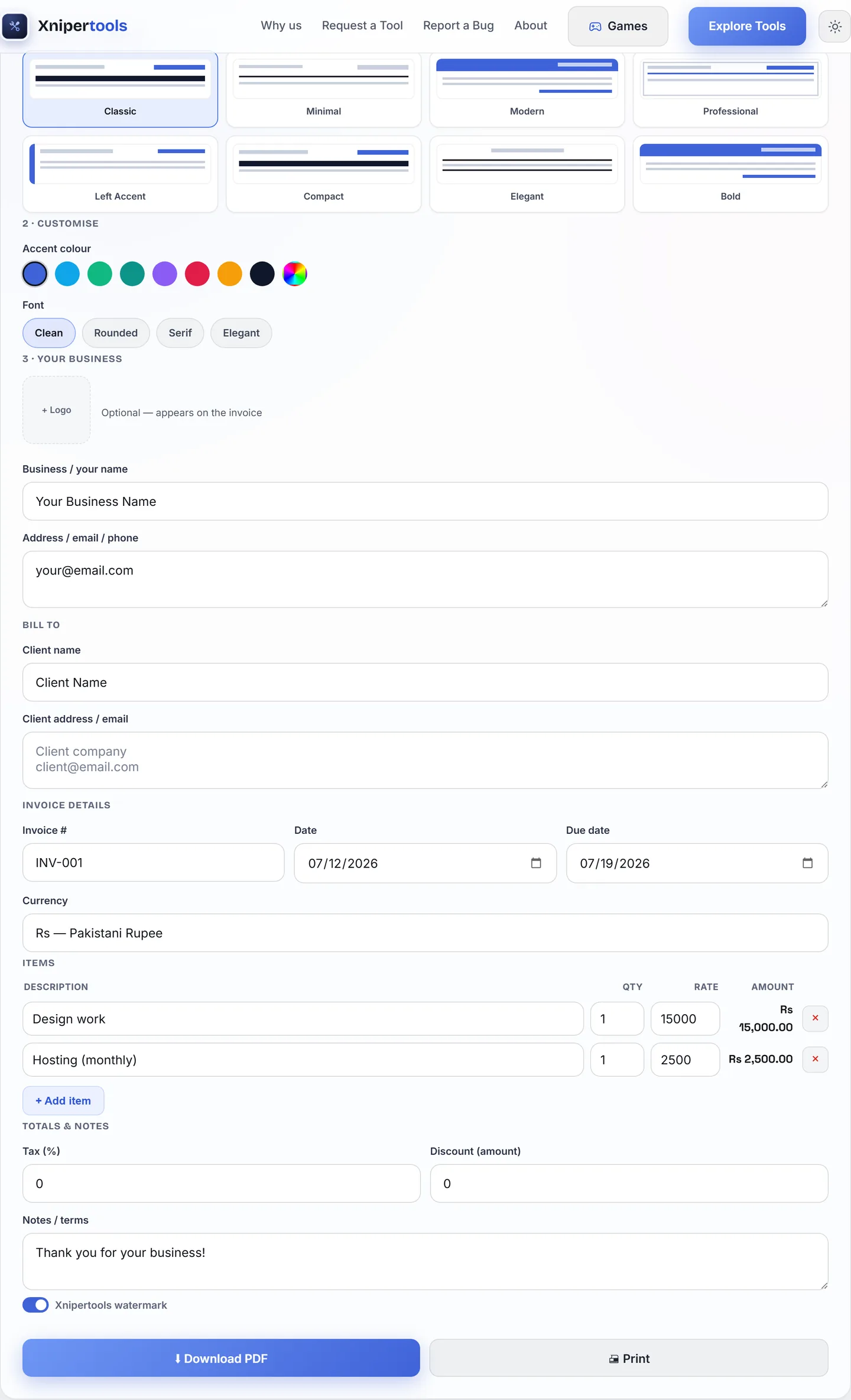
The 9 things every invoice must carry
- The word "INVOICE" — visible at the top. Accounts departments file by document type; don't make them guess.
- A unique invoice number — required for bookkeeping on both sides (see numbering below).
- Issue date — the day you send it. Payment terms count from here.
- Your details — name or business name, address, email/phone, and tax number if you're registered.
- Client's details — the legal entity name, not just your contact's first name. Big companies reject invoices addressed incorrectly.
- Itemised lines — what you did, quantity/hours, rate, amount per line. "Services rendered — 50,000" invites questions; three clear lines don't.
- Totals — subtotal, any tax as its own line, any discount, and the final amount due, in a stated currency.
- Payment terms — "Due within 15 days (by August 26, 2026)". Always convert terms into an actual date.
- How to pay — bank details / payment link. Every missing detail is a day of email ping-pong.
Numbering that scales past invoice #3
The only hard rules: numbers must be unique and sequential-ish (tax auditors dislike gaps and duplicates). Beyond that, pick a scheme that carries information:
| Scheme | Example | Good because |
|---|---|---|
| Plain sequence | INV-0042 | Simplest possible |
| Year + sequence | 2026-014 | Resets yearly, easy filing |
| Year + client + sequence | 2026-ACME-007 | Sortable, professional, hides your total volume |
Payment terms that get you paid faster
- Net 30 is the corporate default — fine for established clients with formal accounts-payable processes.
- Net 7–15 is completely normal for freelance work. Shorter terms don't just move the deadline — they signal that you run your business tightly.
- Deposits: for new clients or projects over a few weeks, 30–50% upfront is standard practice. It filters out non-serious clients before you've spent a fortnight working.
- Milestones: on long projects, invoice per completed phase instead of one giant bill at the end — smoother for the client's budget and your cash flow.
- Late fee clause: a line like "overdue balances accrue 2% per month" — stated on the invoice and agreed beforehand — changes payment behaviour more than it ever earns fees. Check local rules on maximum rates.
When the due date passes: the escalation ladder
Most late payments are disorganisation, not malice. Match your response to that reality:
- Day 1 overdue — friendly nudge. "Just flagging that invoice 2026-ACME-007 fell due yesterday — could you check where it is in your process?" Attach the invoice again; don't make them search.
- Day 7 — direct follow-up. Restate the amount, the due date, and ask for a specific payment date. Copy the accounts email if there is one.
- Day 14 — formal notice. Mention the late-fee clause taking effect and pause ongoing work until the account is settled. Pausing work is your real leverage — use it before resentment builds.
- Day 30+ — final letter before action. A short, unemotional message stating the total including late fees and your next step (collections, small-claims process, or the client's local equivalent). It rarely gets this far when steps 1–3 happened on time.
The pattern that makes this painless: send the reminder the day it's due, every time. Consistency trains clients; sporadic chasing trains them the other way.
Tax, in one honest paragraph
Whether you add VAT/GST/sales tax depends on your country and whether you're registered — and rules for invoicing foreign clients differ again. If you're registered, show the tax as a separate line with your registration number. If you're not sure whether you should be, that's a 15-minute conversation with a local accountant, and it's worth having before a client's finance team asks the question for you. This guide is general education, not tax advice.